Every Half Degree Matters
A conversation with Jacopo Pasotti

Jacopo Pasotti is a science journalist, author and reporter about climate change and biodiversity. His work has appeared in major Italian and international outlets, including L’Espresso, la Repubblica, National Geographic, GEO, Il Sole 24 Ore, and La Rivista del CAI.
Where this conversation begins: In a media landscape often dominated by noise, speed, and polarized opinions, science journalist Jacopo Pasotti offers a clear and grounded perspective on how environmental journalism is evolving — and what still needs to change. From the fight against misinformation to the opportunities (and risks) of using artificial intelligence in science communication, Pasotti shares insights drawn from years of field reporting, interviews, and his analysis of how habitat loss affects mammals and ecosystems.
This conversation highlights the complexity of today’s climate communication: the tension between urgency and accuracy, the need to expand the environmental narrative, and the responsibility of the media in shaping public awareness. Here’s what he said, in eight takeaways.
- i. The Evolution of Environmental Journalism
- ii. The Challenges of Communicating Climate Change
- iii. Gaps in Environmental Coverage
- iv. Media Catastrophism
- v. The Impact on Animal Species
- vi. AI and the Future of Science Communication
- vii. Is There Still Time?
- viii. Advice for Young Communicators
Takeaway 1
📰 The Evolution of Environmental Journalism
“False balance is still very present: facts and baseless opinions are placed on the same level, creating confusion rather than clarity.”
Pasotti strongly criticizes the persistence of false balance in environmental reporting. He explains how talk shows and social media often prioritize conflict and spectacle, giving undue visibility to unqualified voices and undermining public understanding. In contrast, he praises radio and print media for maintaining depth, accuracy, and context, offering more meaningful coverage — even if to a smaller audience. This more traditional approach remains crucial for exploring long-term and complex environmental challenges.
Takeaway 2
📢 The Challenges of Communicating Climate Change
“Dealing with shitstorms was one of the hardest challenges for years.”
The rise of digital platforms has exposed scientists and communicators to waves of online abuse, often coordinated to discredit legitimate research. Pasotti reflects on these difficult years, but also notes a positive shift: as climate impacts become more visible and tangible, more people are showing trust in scientific data. This change marks a turning point in public engagement, though the space for constructive dialogue remains delicate and must be carefully nurtured.
Takeaway 3
🌱 Gaps in Environmental Coverage
“There’s a lot of talk about climate, but still too little about the environment as a whole.”
Pasotti calls out the media’s tendency to focus exclusively on climate change, often ignoring interconnected environmental issues such as biodiversity loss, soil degradation, and water pollution. He advocates for a more systemic narrative — one that reflects the interdependence of all natural systems and emphasizes that tackling climate change requires considering the health of the entire planet, not just carbon levels.
“Sounding the alarm is necessary. But media catastrophism only creates anxiety and misinformation.”
Pasotti warns against the rise of catastrophic narratives in the media, where clickbait headlines and influencer-driven content often distort the scientific message. While he agrees on the urgency of climate communication, he stresses the importance of precision over panic. The goal should be to empower the audience with knowledge — not to paralyze them with fear. While urgency is important, Pasotti warns against panic-driven storytelling. He advocates for precision over panic and urges journalists to empower readers with facts.
Takeaway 5
🐾 The Impact on Animal Species
“Habitat loss and fragmentation are the main drivers of species decline.”
One of the most underreported consequences of environmental degradation, according to Pasotti, is the rapid decline of wildlife populations. Beyond climate change, factors like urban expansion, agricultural pressure and land fragmentation are severely affecting migration routes, food chains, and ecosystem balance. He believes that rethinking land use and integrating conservation strategies is key to preserving biodiversity — which in turn supports human life. He urges a rethinking of land use and conservation policies to protect ecosystems — not only for animals, but for humans too.
Takeaway 6
🤖 AI and the Future of Science Communication
“The question today isn’t whether we use AI, but how we use it.”
Pasotti acknowledges that artificial intelligence is now part of nearly every field, including science journalism. Some media outlets are transparent about it, while others are not. He cites the Italian newspaper "Il Foglio" as a positive example: once a week, it publishes an article entirely generated by AI and clearly labels it as such. Pasotti believes that transparency is essential to maintaining readers’ trust, especially when it comes to disclosing when and how AI is involved in content creation. Personally, he initially experimented with using AI for source gathering, but encountered major limitations — particularly the problem of “hallucinations” or the invention of unverifiable facts and references. As a result, he still relies on traditional, verifiable sources for research. That said, he regularly uses AI for support tasks such as stylistic editing, Instagram post revision, and the translation of complex scientific texts — contexts in which he finds AI to be genuinely helpful. He believes that transparency is essential when integrating AI into science journalism.
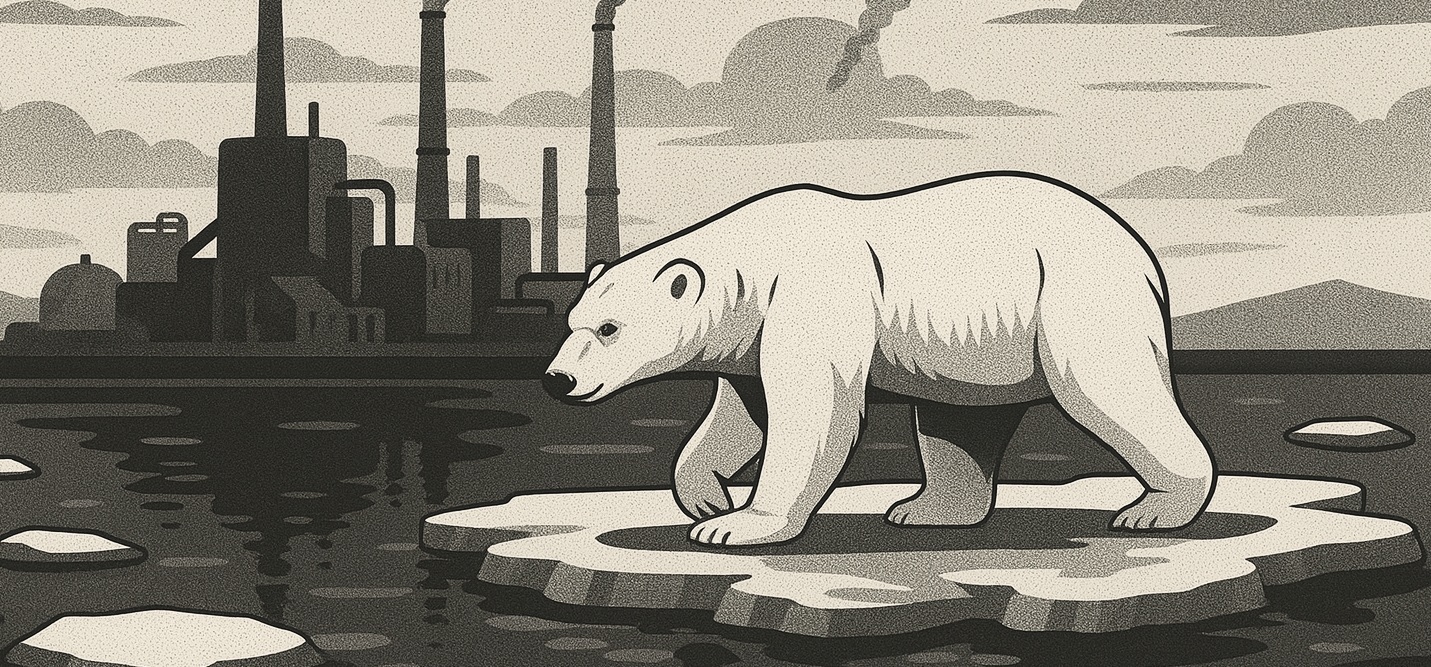
“Every half degree matters. It’s like a train: hitting a tunnel at 120 km/h is not the same as slowing down before you get there.”
Pasotti believes that although the +1.5 °C threshold has already been exceeded, it’s still possible to slow down global warming and reduce future damage. He compares the situation to a train approaching a wall: the speed at which we hit matters. Every fraction of a degree avoided gives us more time to adapt, reinforce infrastructure, and implement policy. The climate crisis, he reminds us, is cumulative — and every action today shapes tomorrow.
Takeaway 8
👩🎓 Advice for Young Communicators
“Don’t stop at journalism: we need cross-disciplinary skills to truly communicate science.”
To communicate science effectively in today’s world, Pasotti encourages young professionals to go beyond traditional journalism. He advocates for developing hybrid skills — combining journalistic storytelling with knowledge in data science, environmental policy, or scientific research. In a media environment disrupted by AI and fragmented attention, versatility becomes a crucial form of resilience. Pasotti himself trains communicators across Europe, from universities to research institutions, promoting a more integrated and rigorous approach.
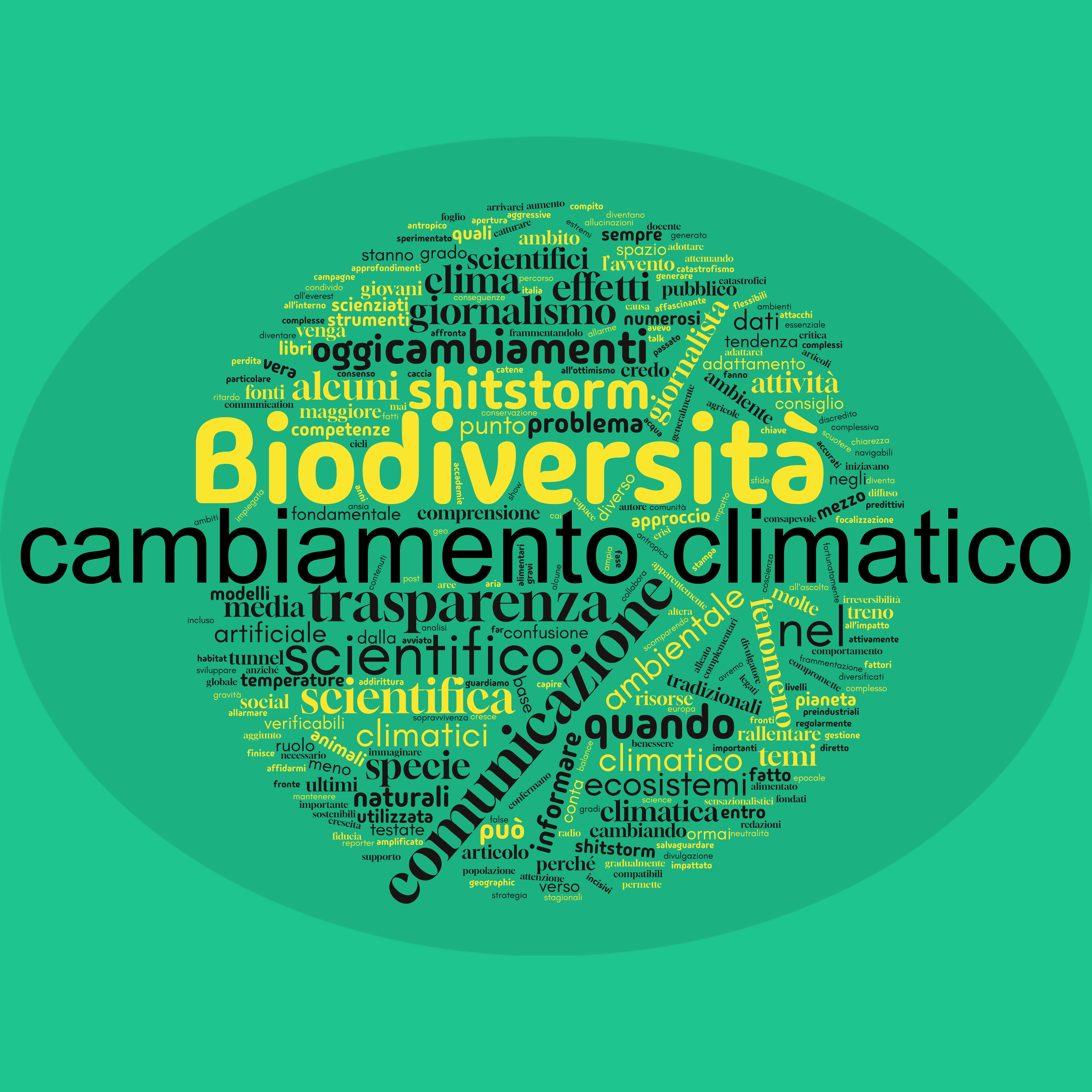
☁️ Keywords from the Interview
A visual summary of the most relevant concepts discussed in this conversation.